Exterior
Aircraft Dry Washing
Dry washing cleans an airframe without rinse water. Purpose-made waterless products are applied panel by panel, lift the soiling, and are buffed away by hand with clean microfibre — leaving a clean, lightly protected surface.
It exists because aircraft live in places water doesn't reach: aprons without a wash bay, hangars without drainage, and airfields where environmental rules restrict run-off. Done properly, on the right aircraft, it is a genuinely excellent maintenance clean — and we are equally clear about when it is the wrong choice.
Suitable for
- Private Owners
- Business Jets
- Charter Operators
- Flying Schools
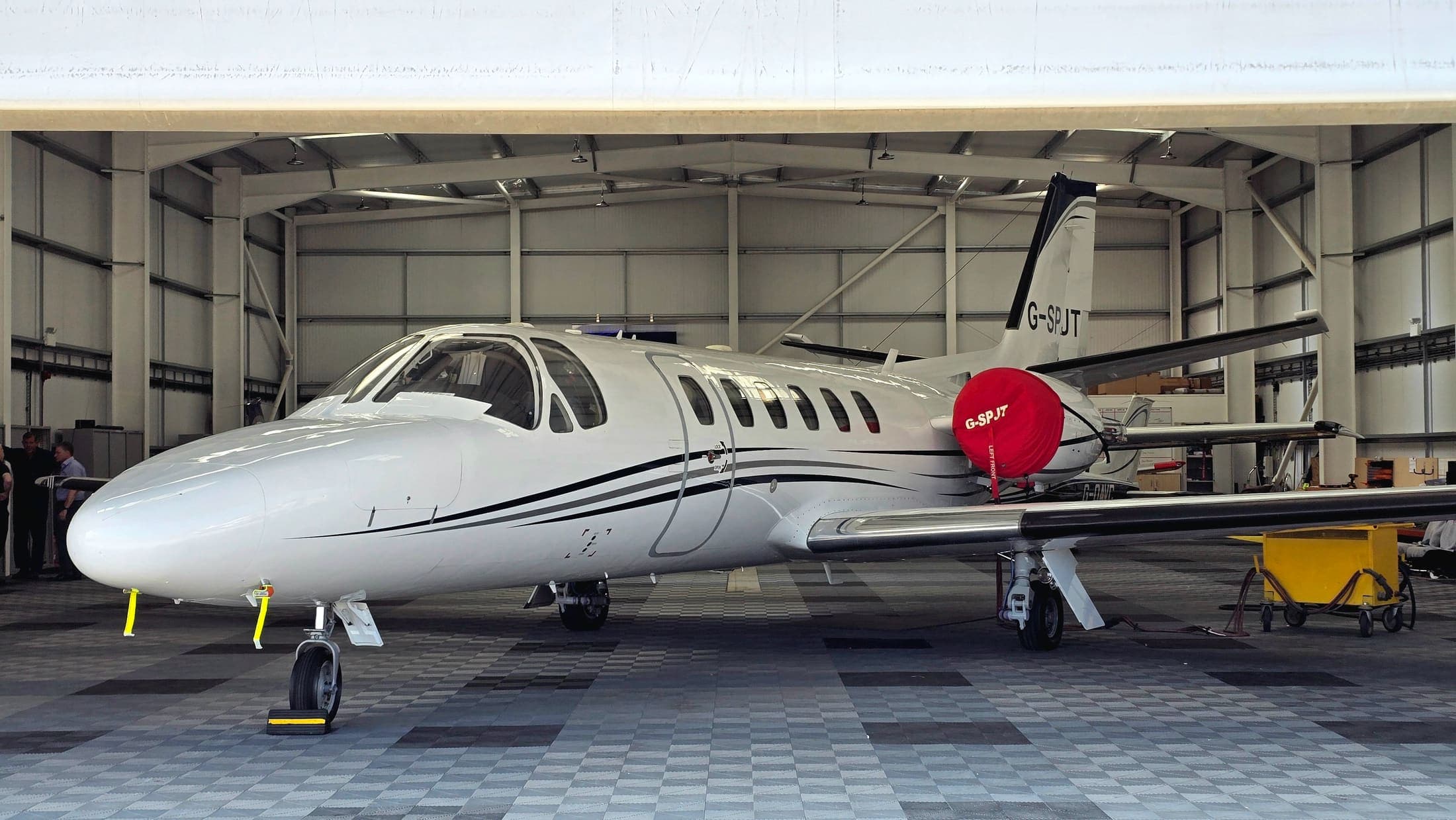
When dry washing is the right choice
Dry washing suits regularly cleaned aircraft carrying normal operating film — dust, light exhaust haze, fingerprints and general airfield grime. It is the standard method for routine cleans between periodic wet washes, for aircraft based where water isn't available, and for working airside without disrupting other traffic.
Because there is no rinse water, there is no run-off to manage, no water forced towards sensors or seals, and no drying pass across hinge lines — several of the classic washing risks simply don't arise.
When it isn't
Dry washing is not a degreaser. Heavy oil, exhaust carbon on the belly, hydraulic residue around gear bays and thick winter grime need a wet wash with targeted degreasing first. Nor is it appropriate on an airframe carrying abrasive grit — rubbing dust and sand across paint scratches it, so a gritty aircraft gets rinsed before anything touches the surface.
The honest pattern for most operators: an initial wet wash to bring the airframe to standard, then dry-wash cycles to keep it there, with degrease attention to the belly and gear as needed.
Why it matters
What this service gives you
Works anywhere
No water, drainage or wash bay required — hangar, apron or grass airfield.
Environmentally straightforward
No run-off, which is exactly what many UK airfields now require.
Light protection
Quality dry-wash products leave a thin polymer film that helps the next clean come up easier.
Sensor-safe by nature
No rinse water near static ports, pitot probes or drain holes.
Questions
Dry Washing — questions answered
Is dry washing safe for paint?
Yes — on an airframe carrying normal light soiling, applied with proper products and clean microfibre in sensible quantities. It is not used on gritty or heavily soiled surfaces, where trapped abrasive particles could mark the paint; those aircraft get a wet wash first.
Is a dry wash as good as a wet wash?
They do different jobs. A wet wash is the deep clean; a dry wash is the maintenance clean. A sensible programme uses both — which is exactly how we structure fleet schedules.
Why do some airfields prefer dry washing?
Wash-water run-off carries detergent and contaminants into drainage, so many airfields restrict where and how aircraft can be wet washed. Dry washing removes the problem entirely, which is why it has become standard practice at many UK sites.
Related
Services that pair with this one
- Exterior Aircraft DetailThe complete exterior service: inspected, washed by the safest appropriate method, finished nose to tail — you never have to choose how.Explore →
- Wet WashingThe deep clean: aviation-approved detergent, hand washing and a controlled rinse for airframes carrying real contamination.Explore →
- Paint Enhancement & ProtectionGloss brought back by machine, then locked in — polymer sealant or long-term coating chosen to suit your aircraft, not sold separately.Explore →
Ready to book dry washing?
Tell us the type, where it's based and what you need. We'll come back promptly with a clear, honest quotation.