Aircraft Types
Turboprop Cleaning & Detailing
Turboprops sit in the demanding middle of the fleet: too large for casual cleaning, worked like airliners, presented like business jets. Kerosene exhaust is their signature problem — TBM and PC-12 stacks stain the forward fuselage sides within sectors of a wash, and King Airs paint their flaps, inboard wings and belly with fine carbon soot.
They also carry the classic brightwork and de-icing combination: polished aluminium leading edges beside pneumatic boots, each with rules the other must respect. Add executive cabins earning charter revenue, and turboprop care rewards a genuinely methodical operator.
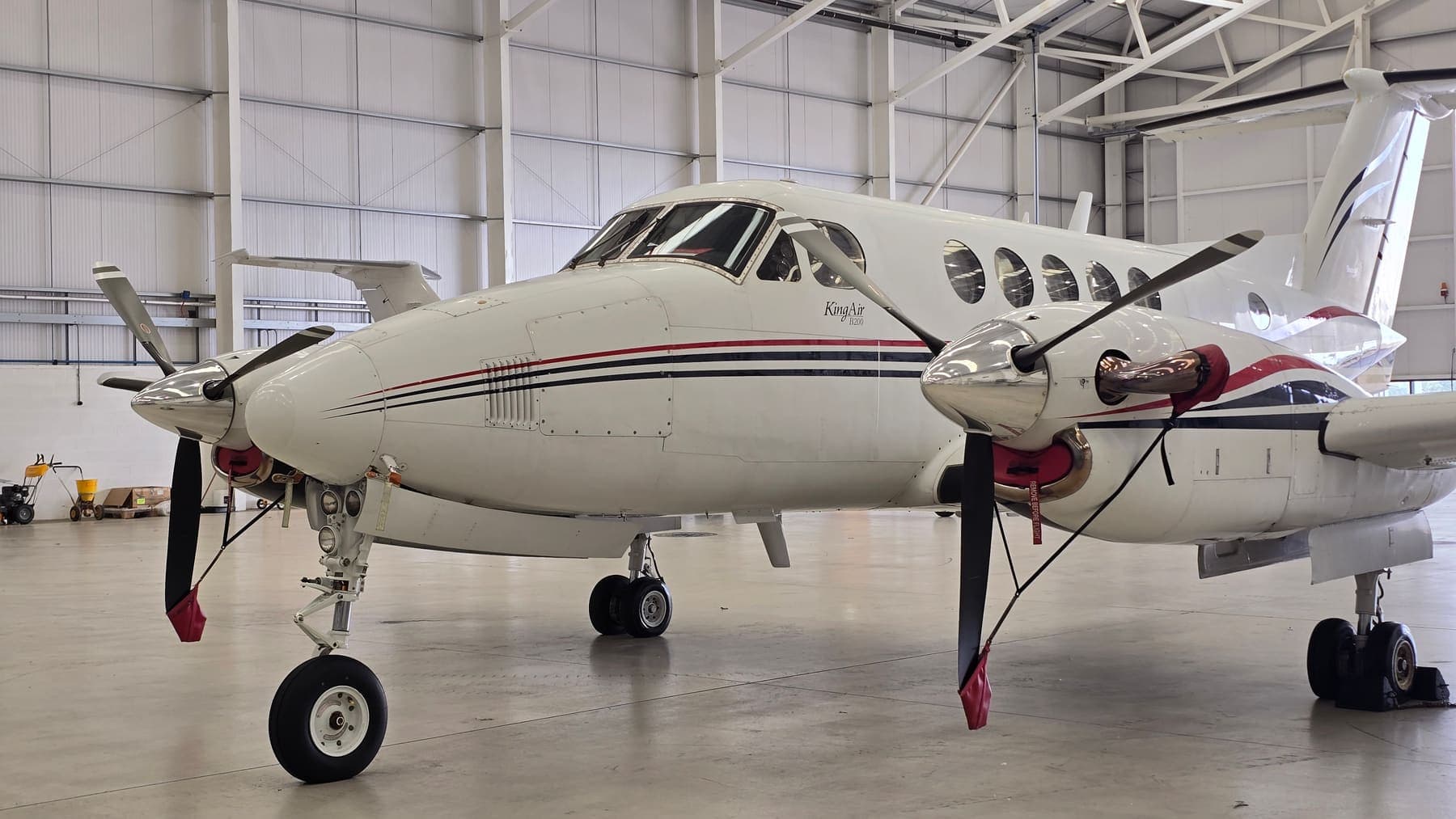
Aircraft in this category include
- Pilatus PC-12 & PC-12 NGX
- Daher TBM 850 / 910 / 940 / 960
- Beechcraft King Air C90, B200 & 350
- Piper M500 & M600
- Cessna 208 Caravan
Typical services
What turboprops usually need
What we're up against
Common contamination
Stack staining
Side-exhaust types (TBM, PC-12) stream carbon down the forward fuselage; it etches paint if left between washes.
Belly & flap soot
King Air exhaust washes fine soot across flaps, inboard wings and belly — a film that demands chemistry, not force.
Boot grime & oxidised brightwork
De-ice boots grey with contamination while neighbouring polished leading edges oxidise — two adjacent surfaces, two different regimes.
Our recommendations
Keeping this category at its best
- Exhaust-track washing every two to four weeks in regular operation keeps staining manageable and paint safe.
- Brightwork: plan re-polishing two to four times a year, with protective treatment between to slow oxidation.
- Boots on their own regime — cleaner, conditioner, nothing abrasive, and never overpolished edges bleeding onto rubber.
- Charter aircraft: cabin turnaround cleans between deep details keep every passenger impression right.
Questions
Turboprops — questions answered
Can exhaust staining be removed completely?
Fresh staining, yes — with appropriate degreasing chemistry and patience. Staining left for months can etch into paint, where washing improves it and polishing finishes the job. The honest answer is frequency: regular washes make removal routine.
Do you polish King Air leading edges?
Yes — graded metal polishing back to mirror, with boots, sensors and surrounding paint masked and protected. It's one of our signature turboprop services and schedules well within a fleet programme.
How do you handle access on larger turboprops?
With appropriate equipment and planning — tail surfaces on a King Air 350 stand nearly six metres up. Access requirements are assessed as part of quotation so the job is done safely and properly.
Services
Popular services for turboprops
- Brightwork RestorationLeading edges, spinners and polished aluminium brought back to a true mirror finish with graded aviation metal-polishing systems.Explore →
- Exterior Aircraft DetailThe complete exterior service: inspected, washed by the safest appropriate method, finished nose to tail — you never have to choose how.Explore →
- Interior Aircraft DetailEvery material in the cabin — leather, carpet, belts, glazing, trim — cleaned as one complete package, finished to boarding standard.Explore →
- Paint Enhancement & ProtectionGloss brought back by machine, then locked in — polymer sealant or long-term coating chosen to suit your aircraft, not sold separately.Explore →
Operating turboprops? Let's talk.
Tell us the type, where it's based and what you need. We'll come back promptly with a clear, honest quotation.