Protection & Enhancement
Aircraft Paint Correction
Paint correction goes beyond enhancement: a compounding stage cuts back established defects — swirl, wash marring, etched contamination, light scratches — and a refining stage restores full gloss. Done well, it transforms how an aircraft presents; done carelessly on an airframe, it removes paint an aircraft cannot spare.
That tension defines our approach. Aircraft topcoats are a fraction of the thickness detailers enjoy on cars, with the least material exactly where machines are most dangerous: rivet heads, skin laps, fastener lines and panel edges. Correction is therefore assessed, measured and staged — and we would rather leave a defect than chase it through the paint.
Suitable for
- Private Owners
- Business Jets
- Aircraft Management Companies
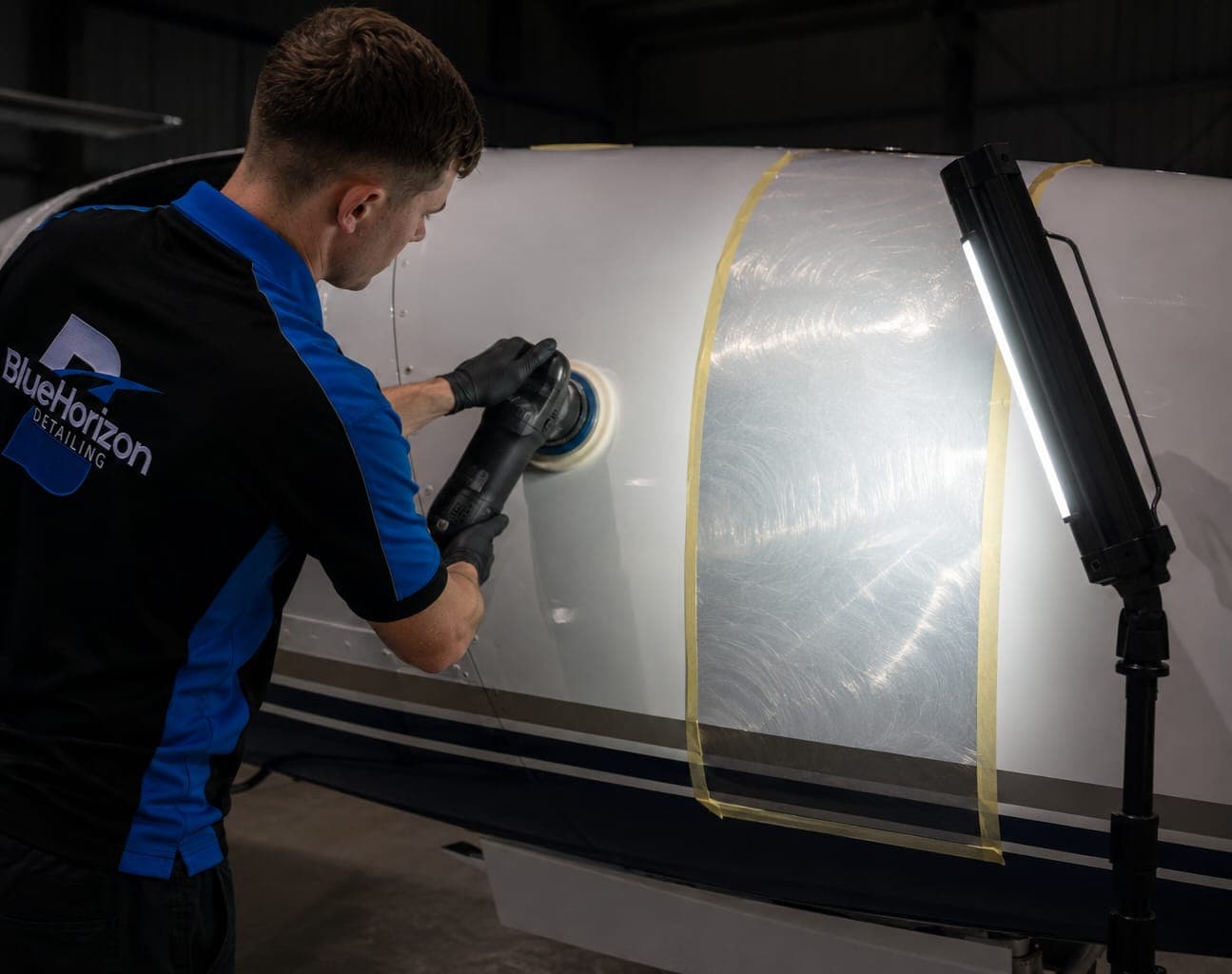
How correction is carried out
Every correction starts with a washed, decontaminated airframe and a genuine assessment: what the defects are, what the paint system is, how it has been treated before, and what can safely be achieved. Expectations are agreed honestly up front — including the marks that should stay.
Compounding is worked in controlled sections with rivet lines and edges taped or hand-finished, followed by a refining polish to restore clarity. The finish is inspected under proper lighting, and completed paint is ideally sealed or coated immediately — corrected paint is at its most receptive, and protection locks the work in.
Honest limits
Correction removes defects by removing material, so it has a budget that aircraft paint sets low. Deep scratches that reach primer, cracked or chalked paint beyond recovery, and finishes already polished hard for years may need touch-up or repaint rather than machine work — and telling you that plainly is part of the service. Matte and satin finishes cannot be corrected; fabric-covered and doped surfaces have their own rules entirely.
Why it matters
What this service gives you
Defect removal
Swirl, marring, etching and light scratches genuinely removed — not glossed over with fillers.
Measured methods
Staged cutting with edges and rivet lines protected, on paint assessed to take it.
Transformative gloss
The closest an existing paint system gets to a repaint, at a fraction of the cost and downtime.
Sale-ready finish
Corrected, protected paint materially improves how an aircraft photographs and inspects.
Questions
Paint Correction — questions answered
How is correction different from enhancement?
Enhancement is a single polishing stage for oxidation and light marring. Correction adds one or more compounding stages to remove established defects, then refines back to full gloss. Correction achieves more and removes more paint — which is why it starts with honest assessment.
Can every scratch be removed?
No — and anyone who promises that on aircraft paint should worry you. Defects deeper than the topcoat can spare are improved, not erased, or referred for touch-up. We agree realistic outcomes before starting.
How long does paint correction take?
A light single typically needs one to two days; larger airframes and heavier defects take more. Correction is skilled, slow work — timescales are confirmed with your quotation.
Related
Services that pair with this one
- Paint Enhancement & ProtectionGloss brought back by machine, then locked in — polymer sealant or long-term coating chosen to suit your aircraft, not sold separately.Explore →
- Complete Aircraft DetailThe flagship: full exterior, full interior, protective sealant and a digital appearance report — the whole aircraft in one booking.Explore →
- Wet WashingThe deep clean: aviation-approved detergent, hand washing and a controlled rinse for airframes carrying real contamination.Explore →
- Brightwork RestorationLeading edges, spinners and polished aluminium brought back to a true mirror finish with graded aviation metal-polishing systems.Explore →
Ready to book paint correction?
Tell us the type, where it's based and what you need. We'll come back promptly with a clear, honest quotation.