Aircraft Types
Light Aircraft Cleaning & Detailing
Light singles are the backbone of UK aviation, and no category spans a wider range of construction: all-metal Cessnas and Pipers, composite Cirrus and Diamonds, and wood-and-fabric classics that need an entirely gentler hand. Cleaning them well starts with knowing which airframe you're standing in front of.
These are also the aircraft that work hardest for their appearance budget: trainers fly daily circuits collecting exhaust film and grass spatter, while owner aircraft parked outside face the UK's full menu of algae, moisture and UV. Our care regimes reflect how each aircraft actually lives.
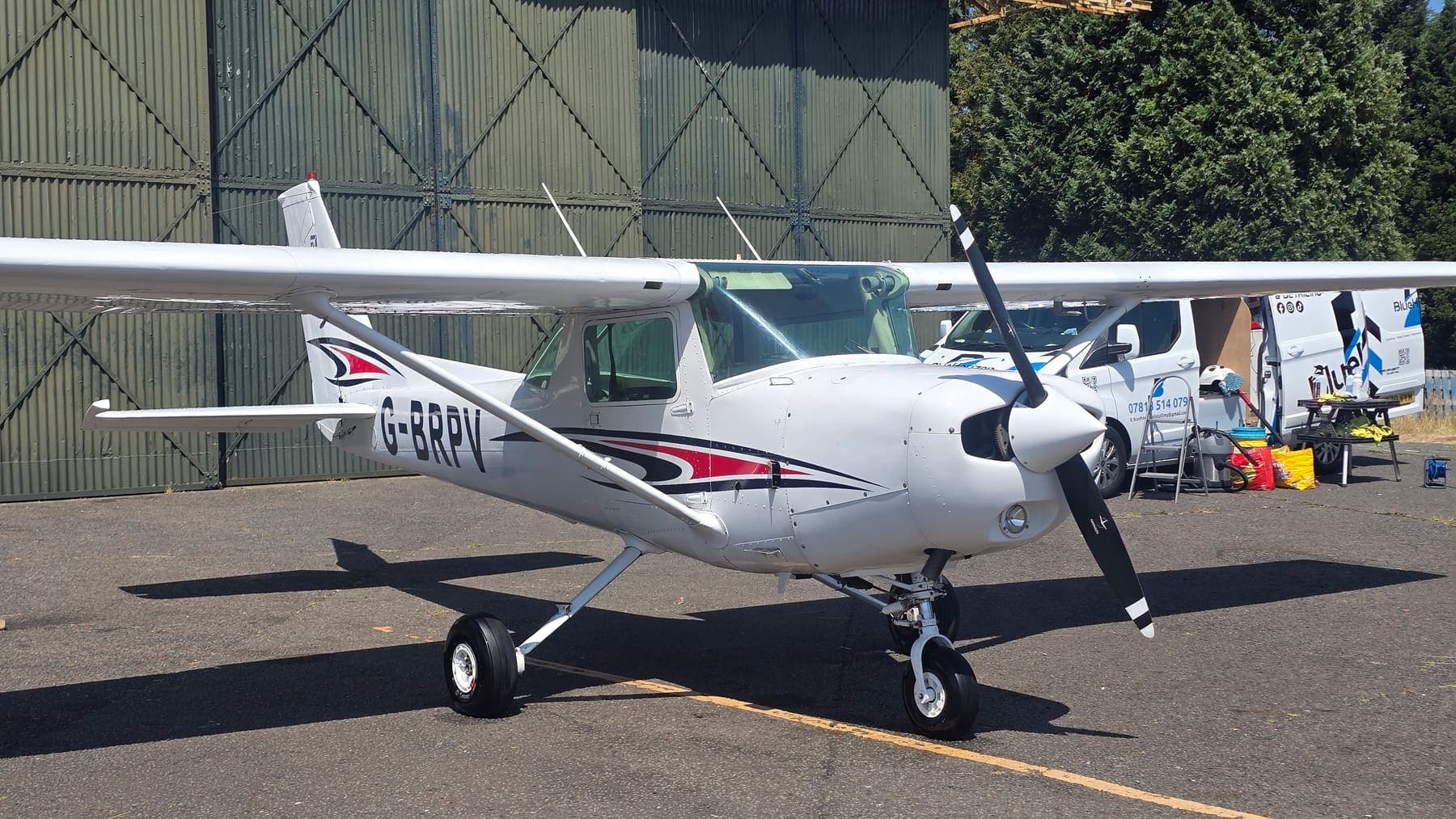
Aircraft in this category include
- Cessna 152 & 172 Skyhawk
- Piper PA-28 Warrior, Archer & Arrow
- Cirrus SR20 & SR22
- Diamond DA40
- Beechcraft Bonanza
- Tecnam P2002 & P2008
- Robin DR400
- Grob G115
Typical services
What light aircraft usually need
What we're up against
Common contamination
Exhaust track
Leaded-fuel exhaust lays a grey-brown film along the belly that ordinary washing smears rather than removes — it needs proper degreasing.
Breather oil
Engine breather outlets streak oil along the belly and flanks; left in place it traps grit and stains paint.
Bug strikes
Insect residue etches leading edges and, on laminar-flow composite wings, measurably costs performance.
Outdoor parking
UK-parked aircraft grow green algae along seams and shaded panels, and collect moisture that drives corrosion in metal types.
Our recommendations
Keeping this category at its best
- Aircraft parked outside: wash every two to four weeks — it's corrosion control, not vanity.
- Hangared aircraft: a full wash every one to two months with dry-wash upkeep between.
- Canopy and windscreen: acrylic-safe cleaning every flight-day the aircraft works hard; never dry-wipe dust.
- Composite types: paint is the structure's UV protection — polishing and sealed protection have real airworthiness-adjacent value.
- Fabric and classic types: gentle products, no soaking, no machine work without assessment — we adapt the regime entirely.
Questions
Light Aircraft — questions answered
Do you clean fabric-covered aircraft?
Yes, with an adapted regime: gentle chemistry, minimal water, no machine polishing and careful hand methods. Fabric and doped surfaces are treated on their own terms, never like metal.
Is ceramic protection worth it on a training aircraft?
Often the better answer for a school aircraft is a polymer sealant refreshed through the year — cheaper per application and forgiving of hard use. For owner-flown aircraft that get cared for, ceramic's multi-year durability makes more sense. We'll recommend honestly either way.
Can you work at small grass airfields?
Yes. Dry washing needs no water supply or drainage, which makes farm strips and grass fields entirely workable — and where a wet wash is genuinely needed we plan it around what the site allows.
Services
Popular services for light aircraft
- Exterior Aircraft DetailThe complete exterior service: inspected, washed by the safest appropriate method, finished nose to tail — you never have to choose how.Explore →
- Aircraft Transparency CareRestoration for windscreens, cabin windows and canopies — fine scratches reduced, haze cleared, optical clarity genuinely improved.Explore →
- Paint Enhancement & ProtectionGloss brought back by machine, then locked in — polymer sealant or long-term coating chosen to suit your aircraft, not sold separately.Explore →
- Paint Enhancement & ProtectionGloss brought back by machine, then locked in — polymer sealant or long-term coating chosen to suit your aircraft, not sold separately.Explore →
Operating light aircraft? Let's talk.
Tell us the type, where it's based and what you need. We'll come back promptly with a clear, honest quotation.