Exterior
Aircraft Window & Windscreen Cleaning
Nothing on an aircraft is easier to ruin with good intentions than its windows. Most GA windscreens and canopies are cast acrylic, and acrylic has rules: ammonia-based glass cleaners cause crazing — a web of fine cracks that never comes out; solvents attack it outright; paper towels and dirty cloths fill it with scratches; and circular wiping leaves swirl that catches low sun exactly when a pilot needs to see through it.
Clear transparencies aren't cosmetic. A scratched, hazed windscreen is a see-and-avoid problem — which is why correct window care is one of the most genuinely valuable services in aircraft appearance, and one we take seriously on every job, not just this one.
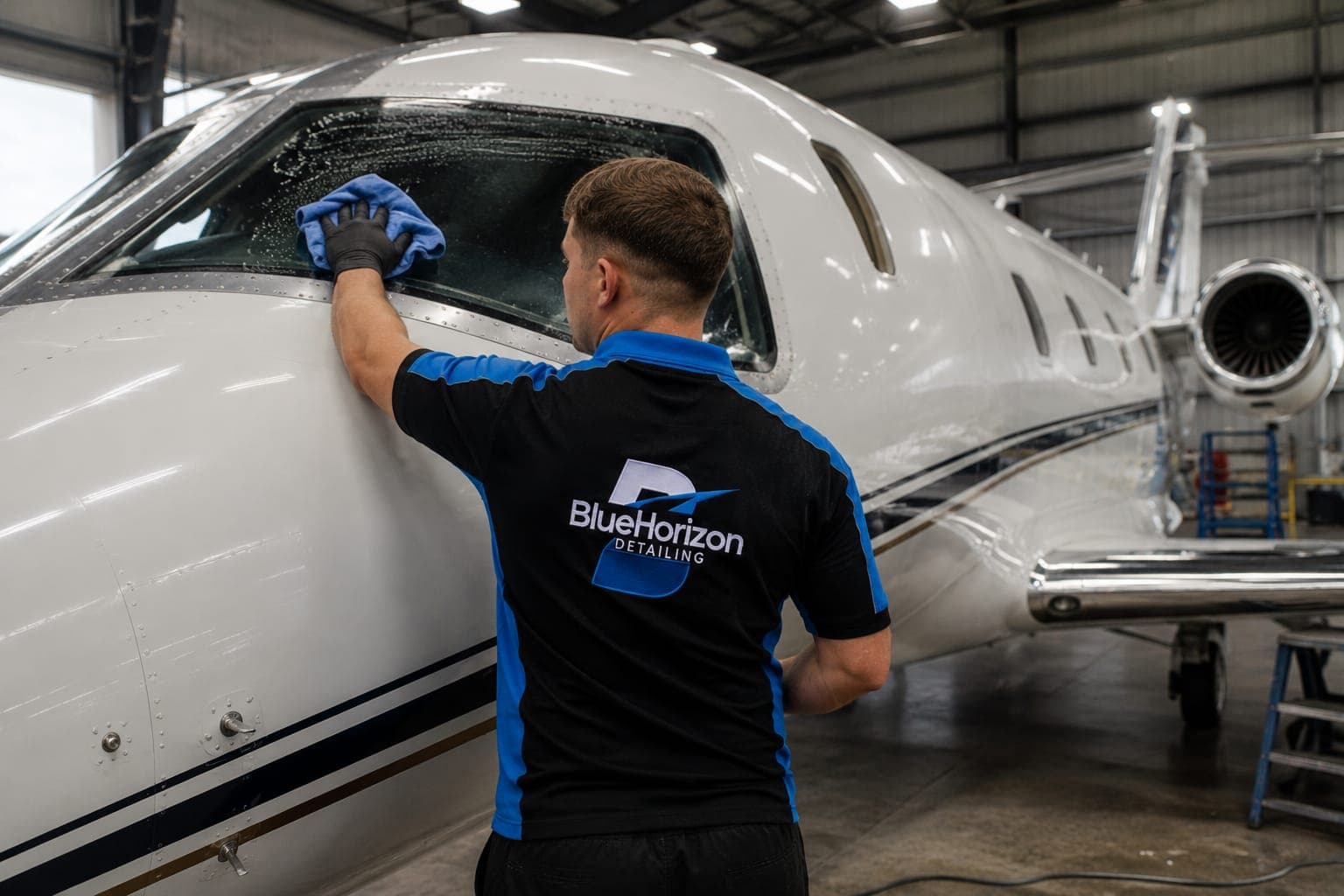
How transparencies should be cleaned
Loose dust and grit come off first with water — flooding, never dry wiping, because dragging dust across acrylic is sanding it. Bug residue is soaked and floated off rather than scrubbed. Cleaning then uses dedicated acrylic cleaners with clean, soft microfibre in straight strokes along the panel, never circles, with cloth faces refreshed constantly.
A dedicated acrylic polish finishes the job, adding a slick, anti-static surface that sheds rain and resists dust. Very light scratches and haze can often be improved with acrylic-specific polishing; deeper damage is assessed honestly — some marks are engineering or replacement matters, not polishing ones.
Jet cockpit glass is treated as its own discipline: laminated, often heated and coated, and cleaned strictly to appropriate products and methods — no abrasives, no blades, nothing that risks the coatings.
Interior surfaces too
The inside face collects haze from cabin materials and hand marks around latches and vents. It is cleaned with the same acrylic-safe discipline — controlled product, clean microfibre, straight strokes — leaving the whole transparency genuinely clear rather than clean on one side.
Why it matters
What this service gives you
Crazing prevented
No ammonia, no solvents — the causes of irreversible acrylic damage never touch your windows.
Scratch-free method
Flood, soak, straight strokes, clean cloth — the technique that keeps transparencies clear.
Safety value
Clear windscreens are a see-and-avoid matter, not just presentation.
Improvement possible
Light haze and scratches often polish out with acrylic-specific products.
Questions
Aircraft Window Cleaning — questions answered
Why can't normal glass cleaner be used on aircraft windows?
Most household glass cleaners contain ammonia, and ammonia attacks acrylic — causing crazing, a network of fine internal cracks that cannot be polished out. Only dedicated acrylic-safe products belong on aircraft transparencies.
Can scratches be polished out of a windscreen?
Fine scratches and haze frequently improve well with acrylic polishing. Deeper gouges, crazing and damage in critical vision areas are replacement or engineering matters — we assess honestly and tell you which is which.
Why straight strokes rather than circles?
Any residual fine marring from wiping aligns with the stroke. Straight, vertical strokes leave marks the eye and low sun rarely catch; circular wiping creates swirl that flares badly against light — exactly what a pilot doesn't need on final into a low sun.
Related
Services that pair with this one
- Exterior Aircraft CleaningThorough, airframe-safe exterior washing that removes exhaust film, oil streaks and contamination — protecting paint and helping control corrosion.Explore →
- Interior Aircraft DetailingComplete cabin care — from flight deck to baggage bay — using products chosen for aircraft materials, not borrowed from the car trade.Explore →
- Dry WashingWaterless exterior cleaning — the right method for routine maintenance washes and for airfields where water or drainage isn't available.Explore →
Ready to book aircraft window cleaning?
Tell us the type, where it's based and what you need. We'll come back promptly with a clear, honest quotation.